
Project guide
What kind of project are you about to begin? Cladding on the entire house? Garden furniture? A carport made of cedar wood? A playhouse from larch? No matter the nature of your project, you can find advice on how to achieve a successful result in this project guide.

Facades, gables, eaves, garages and others

New wood
Wood Preservative
The wood is ready to be treated with a wood preservative, when it is completely dry, clean and solid.
New, untreated wood must always be treated with a wood preservative before or just after installing it. It is not necessary to use wood preservative on pressure- or vacuum impregnated wood unless the wood has been left unprotected for more than 6 months.
When the wood has been treated with a wood preservative, you need fill holes and cracks with putty or acrylic joint filler. You should not leave primed wood for more than two weeks before applying the final treatment.
Exotic wood species such as e.g. teak and mahogany are naturally protected against rot and fungi, and you do not need to use wood preservative of this type of wood.
How to choose wood preservative
There are two kinds of wood preservatives: Water based and solvent based. The choice between the two is a matter of habit.
As a rule, we recommend that you choose a water based wood preservative such as GORI 11, if you are going to apply an acryl-based topcoat, and an oil based wood preservative as GORI 22, if you are going to apply an oil based topcoat.
Preparation
New, untreated wood should not be left too long without treatment. In fact, the natural degradation of the starts the very first day the wood is left untreated, outdoors.
In addition, even if you just bought the wood, it may not come straight from an indoor warehouse – it could have been left outside for a long time at the lumberyard.
If the wood looks grey and dull, and has loose fibres, it could be a sign that it is not completely new wood. If this is the case, it may be necessary to treat the wood in the same way that you treat previously treated wood.
New wood could be infected by fungal spores, which are not visible to the naked eye. To remove this you can use GORI Fjern Belægninger to prevent or slow down growth of non-visible attacks.
Things you need to observe about new, untreated wood
Final treatment
On new wood, you will obtain the longest durability and the best-looking result with an acrylic based, opaque wood protection such as GORI 99 Extreme. The product follows the wood’s movements and provides a wear-resistant and beautiful surface. GORI 99 Extreme is based on the Active Protection.
If you would like to use a translucent wood protection, we recommend GORI 88 Transparent.
No matter which product you choose, you must apply at least two coats of wood protection in order to obtain a suitable layer thickness End grain and particularly exposed surfaces should always be given an extra coat. The layer thickness is extremely important for the protection and the final visual result.
Do not apply wood protection in direct sunlight – this will make the product dry too quickly and the result will be visible stripes or granulated.
As a rule, translucent wood protection must be applied with a brush in order to get an even result. When you apply opaque wood protection, there are several choices, which however, depend of the project: On rough wood, you can use both roller and brush. On planed wood, we recommend brush or short-piled roller.
Previously treated wood
Wood Preservative
The wood should not be treated with a wood preservative until it is completely clean, dry and solid.
Previously treated wooden surfaces should only be treated with a wood preservative on areas, where the wood protection has been worn off completely. When you have checked the health of the wood and repaired/replaced any damaged wood, you must remove the peeling paint/wood protection and then apply wood preservative on these areas.
When the wood has been treated with a wood preservative, you should fill cracks and holes with putty or acrylic joint filler. Primed wood should not be left for more than 2 weeks before applying finial treatment.
Exotic wood species as e.g. teak and mahogany are naturally protected against rot and fungi, and you do not need to use wood preservative.
How to choose wood preservative
There are two kinds of wood preservatives: Water based and solvent based. The choice between the two is a matter of habit.
As a rule, we recommend that you choose a water based wood preservative such as GORI 11, if you are going to apply an acryl-based topcoat, and an oil based wood preservative as GORI 22, if you are going to apply an oil based topcoat.
Preparation
If the wood protection looks worn down, and has started peeling, it is time to protect the wood again.
Check the wood for any defects. When these have been mended, you must remove loose paint, wood protection and/or loose fibres with a scraper, sand paper or a sander. Remove dirt with GORI Algae & Moss Remover.
When the wood is dry, the surface must be sanded. Now you have given your wood the best conditions for the adhesion of the wood protection on the wood surface.
Things you need to check on previously treated wood
Final treatment
On new wood, you will obtain the longest durability and the best-looking result with an acrylic based, opaque wood protection such as GORI 99 Extreme. The product follows the wood’s movements and provides a wear-resistant and beautiful surface. GORI 99 Extreme is based on the Active Protection.
If you would like to use a translucent wood protection, we recommend GORI 88 Transparent.
No matter which product you choose, you must apply at least two coats of wood protection in order to obtain a suitable layer thickness End grain and particularly exposed surfaces should always be given an extra coat. The layer thickness is extremely important for the protection and the final visual result.
Do not apply wood protection in direct sunlight – this will make the product dry too quickly and the result will be visible stripes or granulated.
As a rule, translucent wood protection must be applied with a brush in order to get an even result. When you apply opaque wood protection, there are several choices, which however, depend of the project: On rough wood, you can use both roller and brush. On planed wood, we recommend brush or short-piled roller.

Garden furniture
New or previously treated wood
Preparation
Garden furniture, which is left outside during the summer, is exposed to both sun and rain. In order to protect the furniture it needs regular treatment in order to maintain the original glow of the wood.
New, untreated wood should not be left for too long without treatment. In fact, the natural degradation of the starts the very first day the wood is left untreated outdoors.
New wood may be infected by fungal spores, which are not visible to the naked eye. To remove this you can use GORI Algae & Moss Remover to prevent or slow down growth of non-visible attacks.
Garden furniture should not be treated with a wood preservative.
Final treatment
When the garden furniture is completely dry, apply GORI 36 two times with an interval of 24 hours. This gives you the best and most durable result. Excess oil, which has not been absorbed after app. 15 minutes, is wiped off with a lint-free cloth.
Repeated treatments with GORI 36 will make the furniture darker. To avoid this, you can mix a tinted product with a clear 1:1 – then the wood will not darken as quickly. However, you should never use the colourless as final treatment.

Fences, carports, pergolas, etc
Previously treated wood
Wood Preservative
The wood should not be treated with a wood preservative until it is completely clean, dry and solid.
Previously treated wooden surfaces should only be treated with a wood preservative on areas, where the wood protection has been worn off completely. When you have checked the health of the wood and repaired/replaced any damaged wood, you must remove the peeling paint/wood protection and then apply wood preservative on these areas.
When the wood has been treated with a wood preservative, you should fill cracks and holes with putty or acrylic joint filler. Primed wood should not be left for more than 2 weeks before applying finial treatment.
Exotic wood species as e.g. teak and mahogany are naturally protected against rot and fungi, and you do not need to use wood preservative.
How to choose wood preservative
There are two kinds of wood preservatives: Water based and solvent based. The choice between the two is a matter of habit.
As a rule, we recommend that you choose a water based wood preservative such as GORI 11, if you are going to apply an acryl-based topcoat, and an oil based wood preservative as GORI 22, if you are going to apply an oil based topcoat.
If you want a solvent-based product, we recommend GORI 88, which is a solvent-based wood protection, available in both opaque and translucent colours.
If you want a quick and easy wood protection for your fence, carport, etc., we recommend GORI 44 Transparent.
Regardless of your choice of product, the wood needs at least two coats in order to obtain a good layer thickness. End grain and other exposed surfaces must always be given an extra coat. The layer thickness is very important in relation to protection and the final visual result.
Do not apply wood protection in direct sunlight – this will make the product dry too quickly and the result will be visible stripes or granulated.
Click here to read more about temperature, humidity and the wood moisture, when you apply wood protection.
As a rule, translucent wood protection must be applied with a brush in order to get an even result. When you apply opaque wood protection, there are several choices, which however, depend of the project: On rough wood, you can use both roller and brush. On planed wood, we recommend brush or short-piled roller.
Preparation
If the wood protection looks worn down, and has started peeling, it is time to protect the wood again.
Check the wood for any defects. When these have been mended, you must remove loose paint, wood protection and/or loose fibres with a scraper, sand paper or a sander. Remove dirt with GORI Algae & Moss Remover.
When the wood is dry, the surface must be sanded. Now you have given your wood the best conditions for the adhesion of the wood protection on the wood surface.
Things you need to check on previously treated wood
Final Treatment
On new wood, you will obtain the longest durability and the best-looking result with an acrylic based, opaque wood protection such as GORI 99 Extreme. The product follows the wood’s movements and provides a wear-resistant and beautiful surface. GORI 99 Extreme is based on the Active Protection.
If you would like to use a translucent wood protection, we recommend GORI 88 Transparent.
No matter which product you choose, you must apply at least two coats of wood protection in order to obtain a suitable layer thickness End grain and particularly exposed surfaces should always be given an extra coat. The layer thickness is extremely important for the protection and the final visual result.
Do not apply wood protection in direct sunlight – this will make the product dry too quickly and the result will be visible stripes or granulated.
As a rule, translucent wood protection must be applied with a brush in order to get an even result. When you apply opaque wood protection, there are several choices, which however, depend of the project: On rough wood, you can use both roller and brush. On planed wood, we recommend brush or short-piled roller.
New wood
Wood Preservative
The wood is ready to be treated with a wood preservative, when it is completely dry, clean and solid.
New, untreated wood must always be treated with a wood preservative before or just after installing it. It is not necessary to use wood preservative on pressure- or vacuum impregnated wood unless the wood has been left unprotected for more than 6 months.
When the wood has been treated with a wood preservative, you need fill holes and cracks with putty or acrylic joint filler. You should not leave primed wood for more than two weeks before applying the final treatment.
Exotic wood species such as e.g. teak and mahogany are naturally protected against rot and fungi, and you do not need to use wood preservative of this type of wood.
How to choose wood preservative
There are two kinds of wood preservatives: Water based and solvent based. The choice between the two is a matter of habit.
As a rule, we recommend that you choose a water based wood preservative such as GORI 11, if you are going to apply an acryl-based topcoat, and an oil based wood preservative as GORI 22, if you are going to apply an oil based topcoat.
Preparation
New, untreated wood should not be left too long without treatment. In fact, the natural degradation of the starts the very first day the wood is left untreated, outdoors.
In addition, even if you just bought the wood, it may not come straight from an indoor warehouse – it could have been left outside for a long time at the lumberyard.
If the wood looks grey and dull, and has loose fibres, it could be a sign that it is not completely new wood. If this is the case, it may be necessary to treat the wood in the same way that you treat previously treated wood.
New wood could be infected by fungal spores, which are not visible to the naked eye. To remove this you can use GORI Algae & Moss Remover to prevent or slow down growth of non-visible attacks.
Things you need to observe about new, untreated wood
Final treatment
On new wood, you will obtain the longest durability and the best-looking result with an acrylic based, opaque wood protection such as GORI 99 Extreme. The product follows the wood’s movements and provides a wear-resistant and beautiful surface. GORI 99 Extreme is based on the Active Protection.
If you would like to use a translucent wood protection, we recommend GORI 88 Transparent.
No matter which product you choose, you must apply at least two coats of wood protection in order to obtain a suitable layer thickness End grain and particularly exposed surfaces should always be given an extra coat. The layer thickness is extremely important for the protection and the final visual result.
Do not apply wood protection in direct sunlight – this will make the product dry too quickly and the result will be visible stripes or granulated.
As a rule, translucent wood protection must be applied with a brush in order to get an even result. When you apply opaque wood protection, there are several choices, which however, depend of the project: On rough wood, you can use both roller and brush. On planed wood, we recommend brush or short-piled roller.
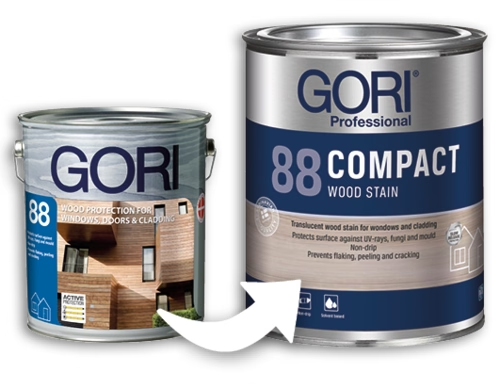
Read more about our GORI 88

Wooden decks
New wood
Wood preservative
The wood is ready to be treated with a wood preservative, when it is completely dry, clean and solid.
New, untreated wood must always be treated with a wood preservative before or just after installing it. It is not necessary to use wood preservative on pressure- or vacuum impregnated wood unless the wood has been left unprotected for more than 6 months.
When the wood has been treated with a wood preservative, you need fill holes and cracks with putty or acrylic joint filler. You should not leave primed wood for more than two weeks before applying the final treatment.
Exotic wood species such as e.g. teak and mahogany are naturally protected against rot and fungi, and you do not need to use wood preservative of this type of wood.
How to choose wood preservative
There are two kinds of wood preservatives: Water based and solvent based. The choice between the two is a matter of habit.
As a rule, we recommend that you choose a water based wood preservative such as GORI 11, if you are going to apply an acryl-based topcoat, and an oil based wood preservative as GORI 22, if you are going to apply an oil based topcoat.
Preparation
New, untreated wood should not be left too long without treatment. In fact, the natural degradation of the starts the very first day the wood is left untreated, outdoors.
In addition, even if you just bought the wood, it may not come straight from an indoor warehouse – it could have been left outside for a long time at the lumberyard.
If the wood looks grey and dull, and has loose fibres, it could be a sign that it is not completely new wood. If this is the case, it may be necessary to treat the wood in the same way that you treat previously treated wood.
New wood could be infected by fungal spores, which are not visible to the naked eye. To remove this you can use GORI Algae & Moss Remover to prevent or slow down growth of non-visible attacks.
Final treatment
A wooden deck is horizontal. Therefore, it is especially exposed to dirt and wear and at the same time, it is constantly exposed to sun and water.
In order to keep a wooden deck healthy and nice to look at, it must be treated more often than other woodwork. You must expect to treat your wooden deck every year.
As final treatment, the best result is obtained by using GORI 37 or GORI 38. Both products penetrate deep into the wood, adds glow and provide a beautiful result, while also slowing down the growth of mould and fungi on the surface.
Repeated treatments with decking oil will make the deck darker. To avoid this, you can mix a tinted product with a clear 1:1 – then the wood will not darken as quickly. However, you should never use the colourless as final treatment.
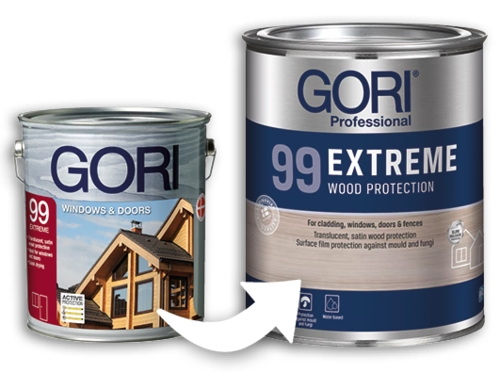
GORI 99 Extreme
Read more about our Gori 99 Extreme.

Windows and doors
Previously treated wood
Wood preservative
The wood is ready to be treated with a wood preservative, when it is completely dry, clean and solid.
New, untreated wood must always be treated with a wood preservative before or just after installing it. It is not necessary to use wood preservative on pressure- or vacuum impregnated wood unless the wood has been left unprotected for more than 6 months.
When the wood has been primed, you need fill holes and cracks with putty or acrylic joint filler. You should not leave primed wood for more than two weeks before applying the final treatment.
Exotic wood species such as e.g. teak and mahogany are protected against rot and fungi by nature and you do not need to use wood preservative of this type of wood.
How to choose wood preservative
There are two kinds of wood preservatives: Water based and solvent based. The choice between the two is a matter of habit.
As a rule, we recommend that you choose a water based wood preservative such as GORI 11, if you are going to apply an acryl-based topcoat, and an oil based wood preservative as GORI 22, if you are going to apply an oil based topcoat.
Preparation
If the wood protection looks worn down, and has started peeling, it is time to protect the wood again.
Check the wood for any defects. When these have been mended, you must remove loose paint, wood protection and/or loose fibres with a scraper, sand paper or a sander. Remove dirt with GORI Algae & Moss Remover.
When the wood is dry, the surface must be sanded. Now you have given your wood the best conditions for the adhesion of the wood protection on the wood surface.
Things you need to check on previously treated wood
Final Treatment
The best and most durable wood protection for windows and doors is GORI 88 or GORI 99 Extreme, which is our opaque wood protection for windows.
Please note that gazing beads, sealant tape and bottom panel are extremely exposed to rain. If the sealant tape or the putty is loose or defective, water can penetrate into the wood. Then the wood protection will start peeling, and the conditions for rot are present. Therefore, you need to repair lists and sealant tape before you apply wood protection.
Condensation on the inside of windows could mean that there is a lack of ventilation/airing in the house. Always make sure that the bottom of the window has an outward gradient, so water is led away. Water may also accumulate in cracks and holes, so these should be filled.
If you want to treat your noble wood windows and doors with a translucent wood protection, we recommend using GORI 88.
New wood
Wood preservative
The wood is ready to be treated with a wood preservative, when it is completely dry, clean and solid.
New, untreated wood must always be treated with a wood preservative before or just after installing it. It is not necessary to use wood preservative on pressure- or vacuum impregnated wood unless the wood has been left unprotected for more than 6 months.
When the wood has been treated with a wood preservative, you need fill holes and cracks with putty or acrylic joint filler. You should not leave primed wood for more than two weeks before applying the final treatment.
Exotic wood species such as e.g. teak and mahogany are naturally protected against rot and fungi, and you do not need to use wood preservative of this type of wood.
How to choose wood preservative
There are two kinds of wood preservatives: Water based and solvent based. The choice between the two is a matter of habit.
As a rule, we recommend that you choose a water based wood preservative such as GORI 11, if you are going to apply an acryl-based topcoat, and an oil based wood preservative as GORI 22, if you are going to apply an oil based topcoat.
Preparation
New, untreated wood should not be left too long without treatment. In fact, the natural degradation of the starts the very first day the wood is left untreated, outdoors.
In addition, even if you just bought the wood, it may not come straight from an indoor warehouse – it could have been left outside for a long time at the lumberyard.
If the wood looks grey and dull, and has loose fibres, it could be a sign that it is not completely new wood. If this is the case, it may be necessary to treat the wood in the same way that you treat previously treated wood.
New wood could be infected by fungal spores, which are not visible to the naked eye. To remove this you can use GORI Algae & Moss Remover to prevent or slow down growth of non-visible attacks.
Things you need to observe about new, untreated wood
Final treatment
Protecting wooden windows and doors is often quite a project. If you do the work correctly, it will be many years, before you have to do it again.
The best and most durable protection for windows and doors is carried out with is GORI 88 or GORI 99 Extreme.
Make sure that the bottom panel of the window has an outward gradient, so water is led away from the window. Water may also accumulate in cracks and holes, so these must be filled.
If you want to treat windows made of noble wood with a translucent wood protection, we recommend is GORI 88.